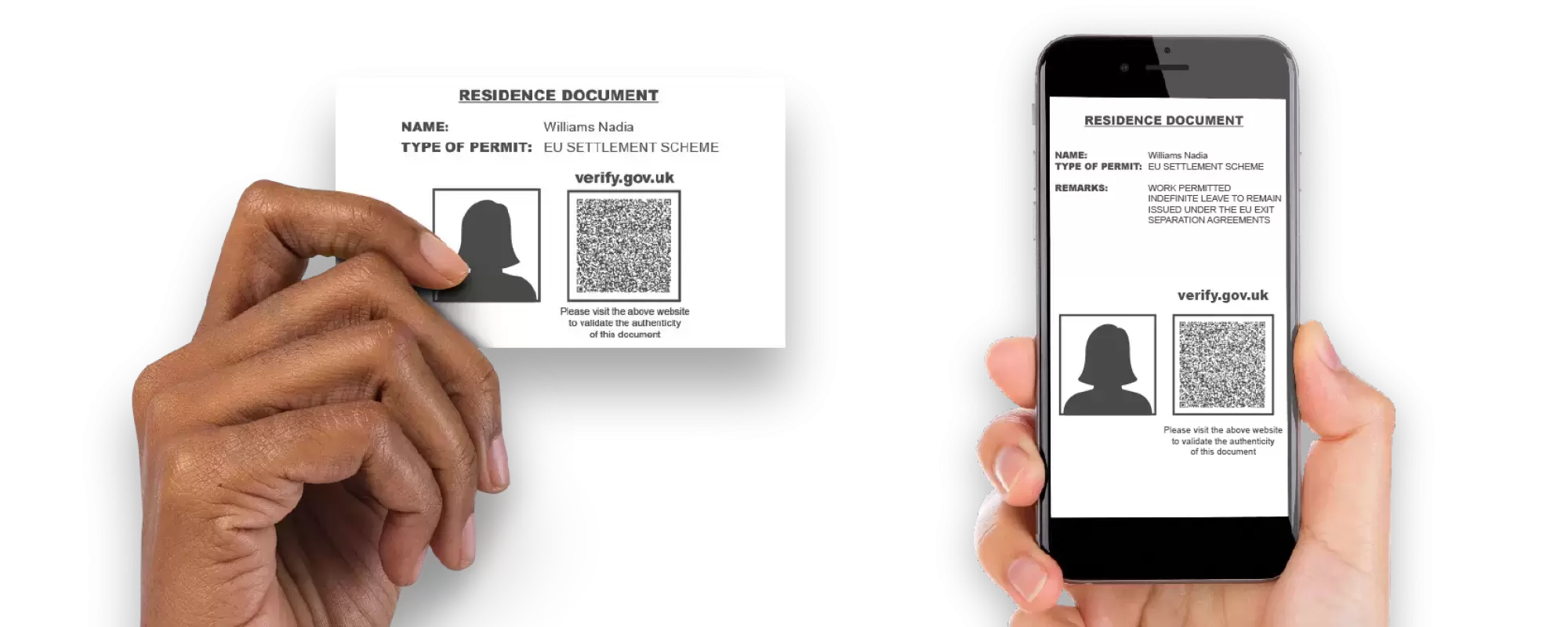
Our proposal for fixing the digital status
Our proposal addresses the need for EU citizens to have a physical backup of their immigration status.
EU citizens want to be able to prove their status without relying solely on the digital immigration system.
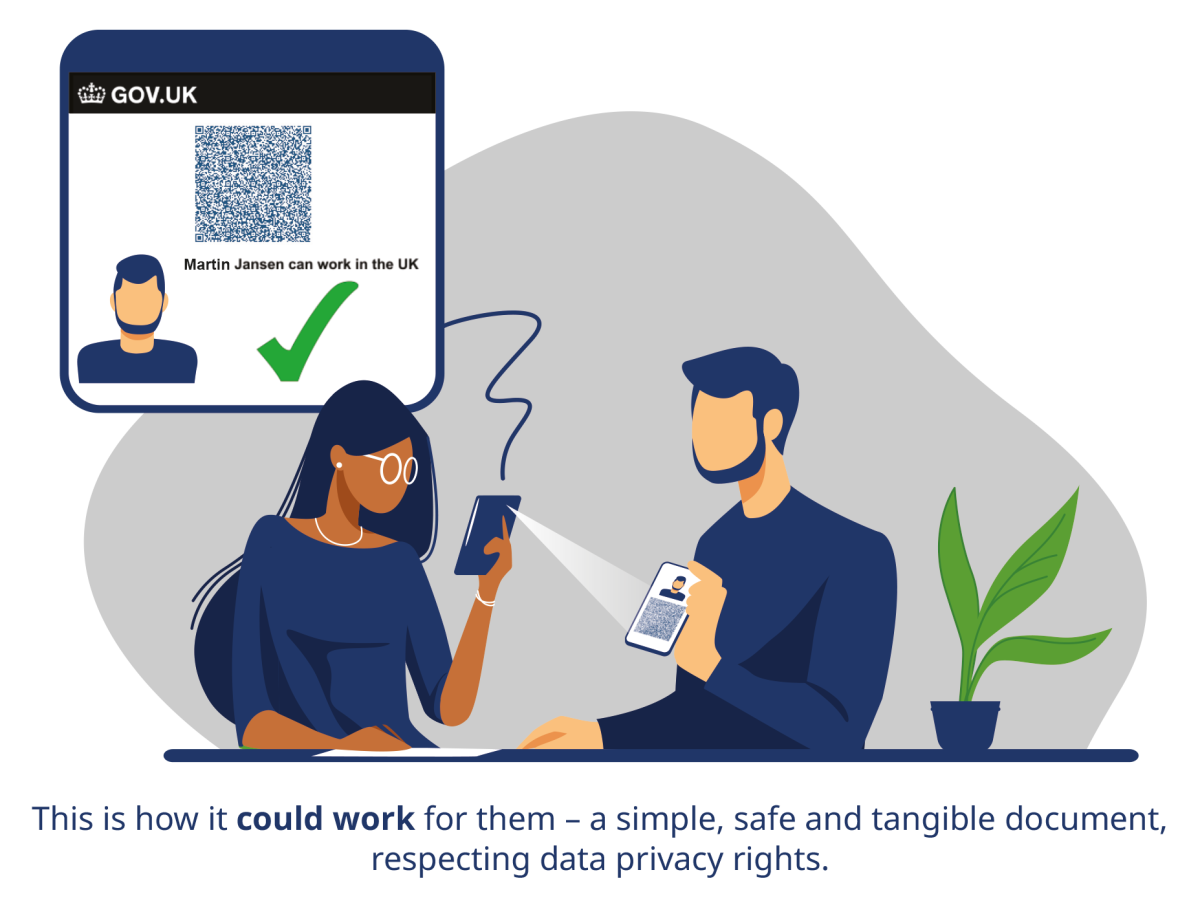
How it could look
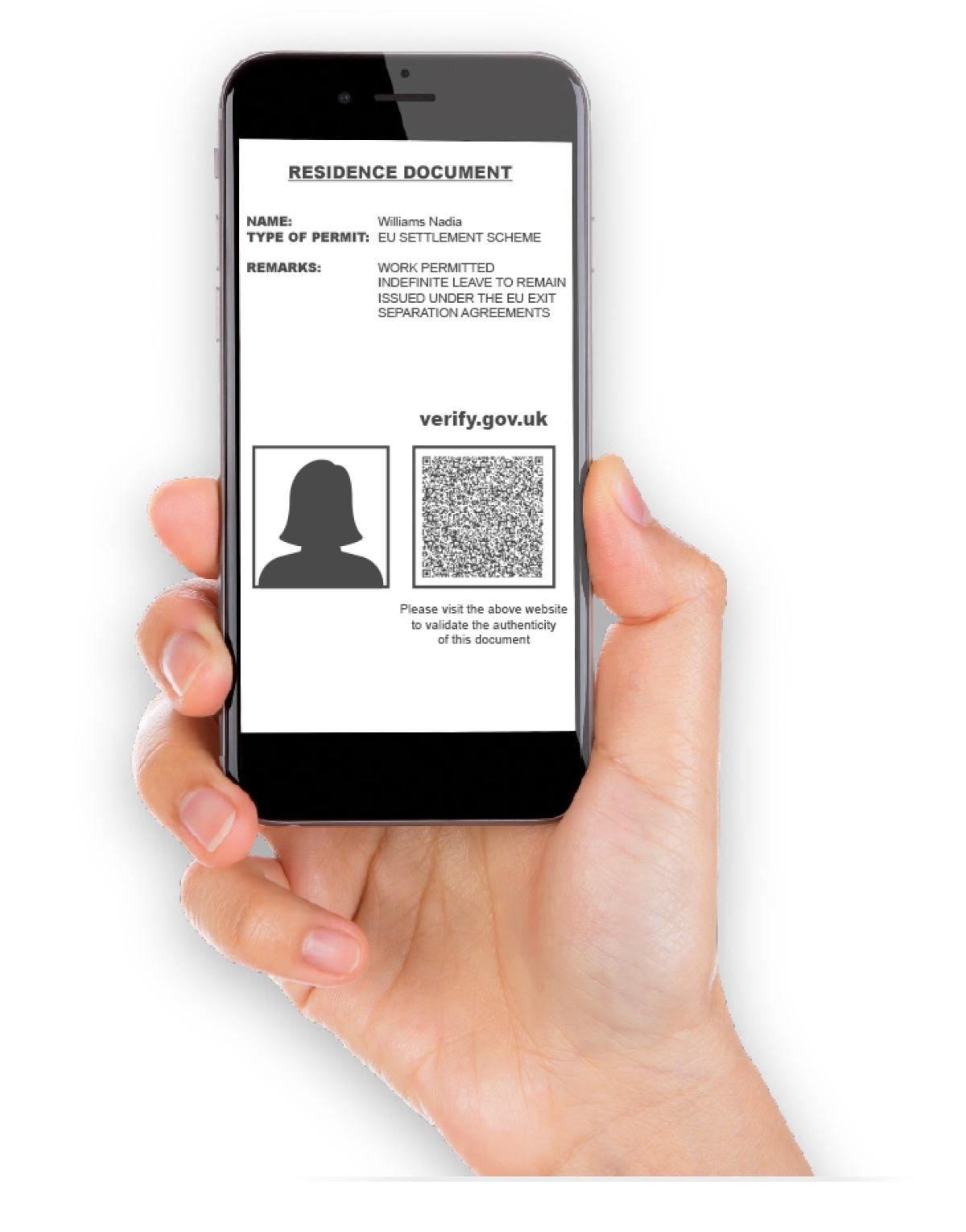
On a mobile device
Giving proof of status back to the status holder
A mobile app on the status holder’s phone, allowing them to demonstrate their immigration status and rights even in situations where there is no internet, when Government web services are unavailable, or Home Office records are compromised due to technical glitches.
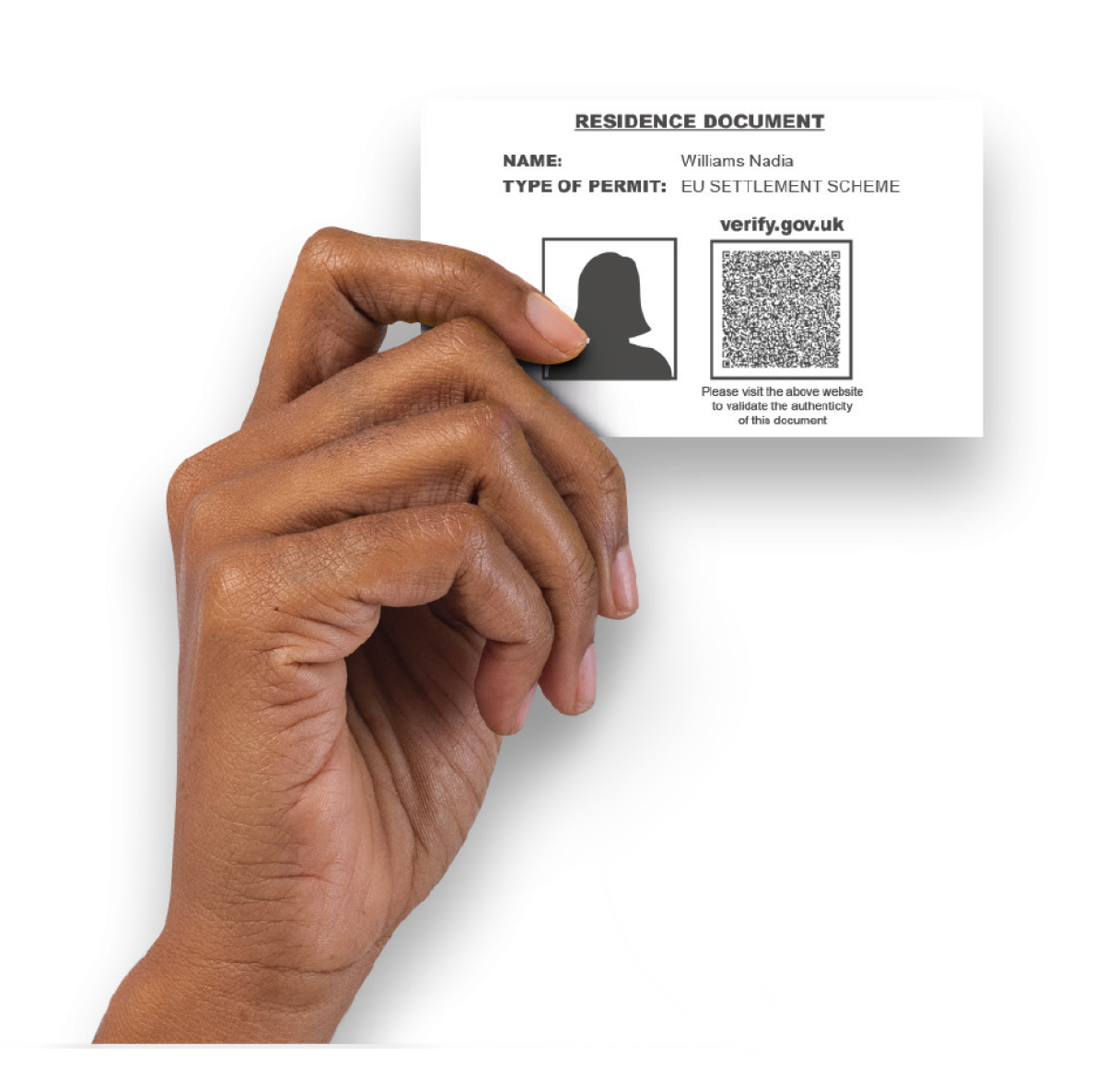
On a card
Cost effective and secure physical proof
Just as with boarding passes and Covid-19 passes, it is possible to print a copy of the proof of immigration status without losing any of its security features.
Many like to do this for extra peace of mind, removing worries such as phones running out of battery charge.
It is therefore also secure and cost effective for the government to produce simple physical cards for those without smartphones or digital literacy.
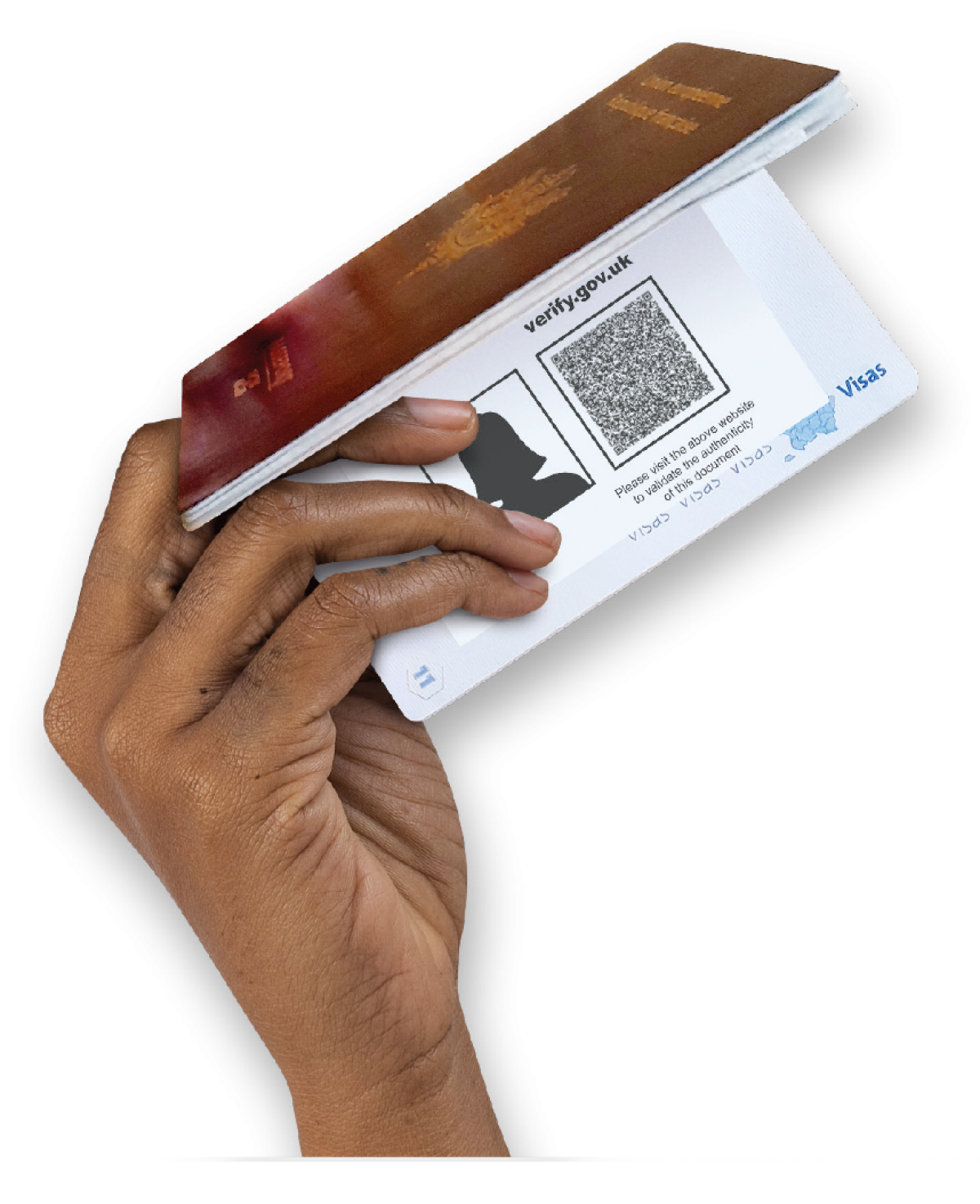
Sticker in passport
Secure, cost effective and ICAO-compliant entry visas
Even if the ultimate goal is document-free travel (in a world that is sufficiently integrated and coordinated), in the immediate future people still need to be able to demonstrate their right to travel to the UK.
For visitors and those with entry clearance, but without leave to remain and the app or card above, this proposal offers a highly secure and cost effective vignette to replace the current generation of vignettes being phased out. This vignette would be fully compliant with International Civil Aviation Organization (ICAO) standards.
Background
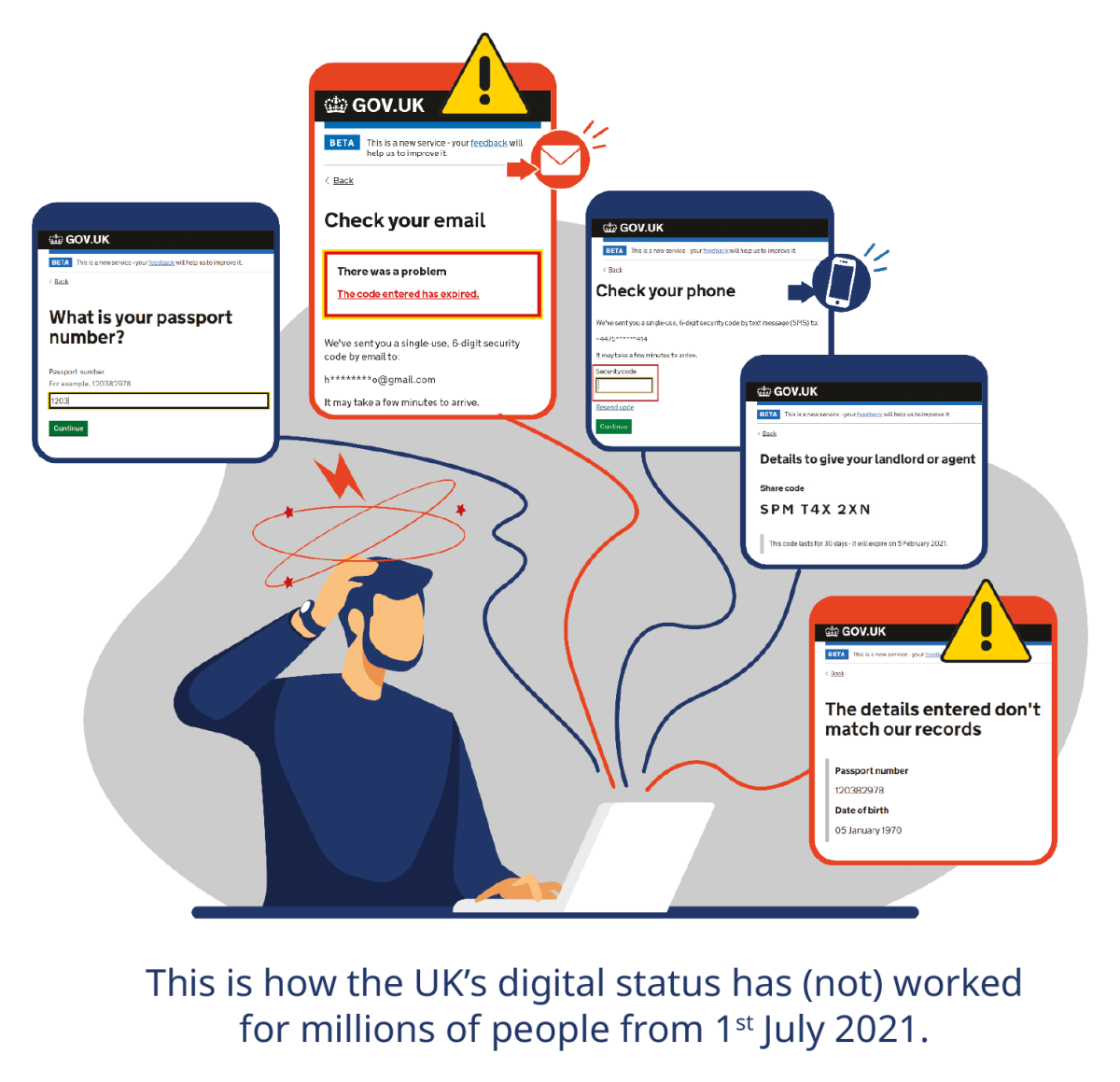
Since the European Union Settlement Scheme launched in 2018, millions of EU citizens in the UK were granted a new immigration status. It is digital-only, and onlineonly. Status holders get no document they can hold onto. By the end of 2024, all migrants in the UK will have lost their existing documents and will need to have migrated onto the online-only eVisa system.
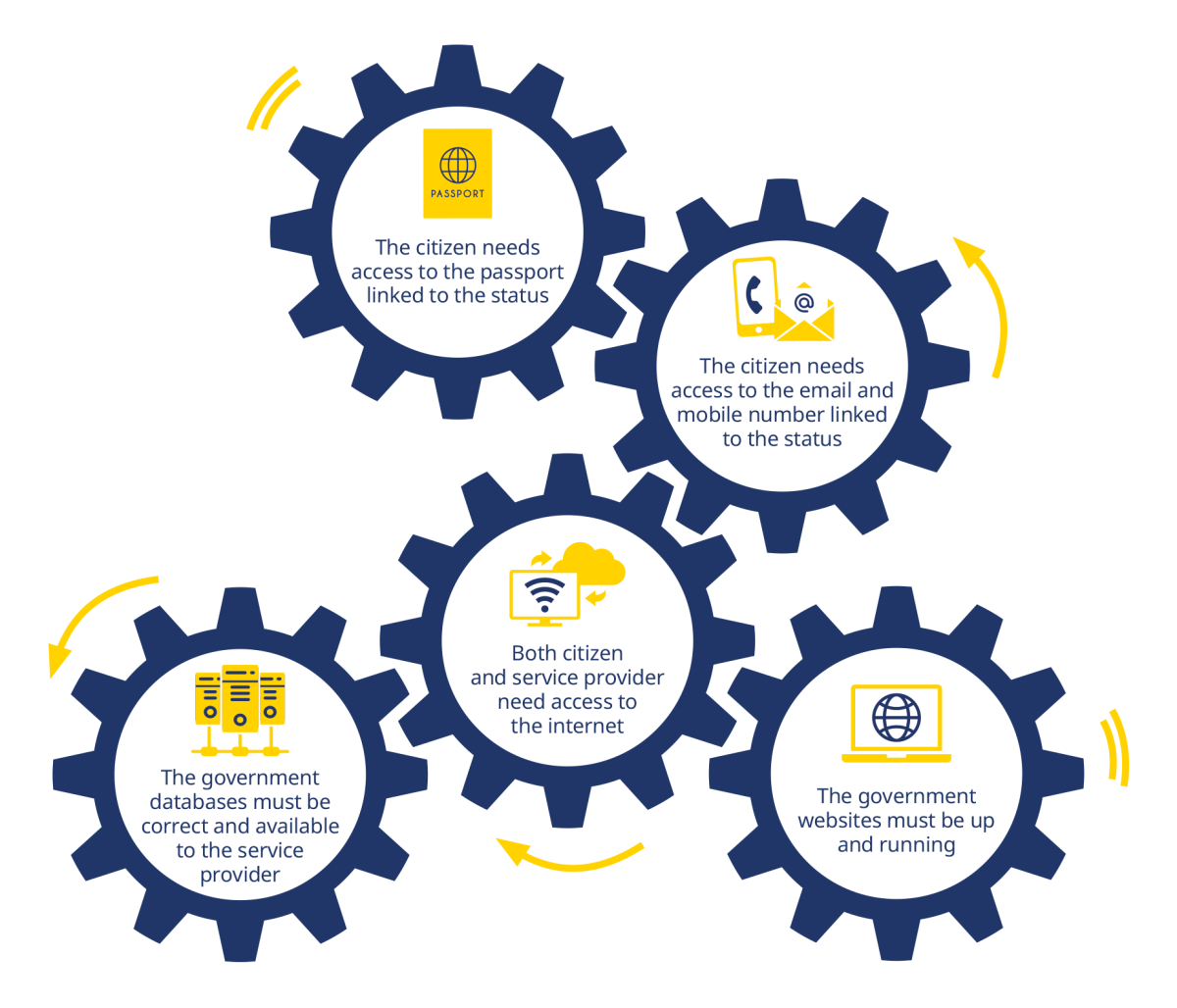
Many are struggling with this system. It is inaccessible for those with low digital literacy or certain disabilities, and it is prone to glitches. In order to view or prove their status, holders need a smartphone or computer, access to the relevant email account or phone number, and a reliable internet connection. And even if they have all of that, they then depend both on the Home Office service and databases being up and running, and on their Home Office records being unaffected by data corruption. A successful immigration status check has many cogs that work together. If one of them fails – the whole check fails. And it often does.
In the autumn of 2020, a House of Lords Immigration Bill amendment called for “physical proof confirming pre-settled status or settled status to all EEA and Swiss nationals and their families who have been granted such status under the EU Settlement Scheme and who request such proof.”
The Government’s response included the following statement “If it is to serve as proof of status to third parties such as employers and landlords, and as we need to reduce the risk of document fraud, this would mean issuing biometrics cards, which would incur a significant and unfunded cost, not a small, insignificant cost.”
It is understandable that the Government’s concerns focus on security and cost.
However, there are solutions which would address both the Home Office’s concerns on security and cost, while at the same time addressing the concerns that individuals have about their data and privacy rights, accessibility and desire to have a permanent record and stable proof of status that belongs to them. In the digital age, this does not have to mean biometric residence cards.
The time to discuss these safe and cost-effective alternatives is now, as biometrics cards are being phased out for all migrants.
How would it work?
The existing system for proving status (generating share codes through the Home Office ‘View & Prove’ websites) could continue working exactly as it does at the moment.
However, alongside this, the Home Office would implement a tangible proof of status: for example, the “Secure QR Code” system which is proposed below. This can be developed in a very short period of time, within a minimal budget, as this is well-established technology.
All citizens with UK immigration status would be issued with a document showing what their status is. The document would also contain a Secure QR Code to digitally verify its authenticity. This is conceptually similar to a boarding pass for a flight, but this code would be valid for multiple use, rather than a single event.(2)
The QR code could contain the encrypted details of the citizen’s immigration status and their biographic details. The code is impossible to tamper with and cannot have been produced by anyone other than the Home Office, since it would be digitally signed by a Home Office private key using well established Public Key Infrastructure (as also used in biometric passports, and fully compliant with International Civil Aviation Organization (ICAO).
There could be multiple ways of issuing the document to the status holder – whether electronically or through the post. Citizens could request the document via a website or a dedicated telephone number. Those who receive it electronically could print their document themselves, or have it printed for them by a friend or support organisation. An option to issue the QR codes as passport stickers could be also explored. There are many possibilities to help prevent a digital divide and maintain a low cost.
On the other hand, for those who are comfortable with everything digital, they could simply rely on the document on their phone or another device. The point is that the status holder can choose what format works best for them, and it is under their control.
When a prospective employer or landlord wants to check someone’s rights, they would be able to look at the document, and verify its authenticity by scanning the QR code. They could do this by using an app available for download from the Home Office website. The service provider would trust the app since it originates from the gov.uk website (the current digital status system relies on trusting the same gov.uk domain). Inputting the citizen’s date of birth could provide an extra security step to unlock the QR code.
The citizen could show the service provider their QR code in any number of ways – if they were meeting face-to-face the individual could hand over the document, or show the QR code on their phone. They could display the QR code in an online meeting. Or they could send the document to the provider electronically or by post. In other words, this would work exactly as if the user needed to show proof of a British passport or physical residence card but safer, since the employer or landlord could be sure that the QR code is authentic.
Crucially, the QR code could also work offline. This is important because there are times when the gov.uk website is down, either for maintenance or because of a glitch. Equally, an individual may be asked to show their status in an area with poor internet or 4G coverage. Under the current system, a status check using View & Prove is not possible in those circumstances. The Home Office position to date has been that any “check of an individual’s immigration status must be done in realtime to reflect the current immigration status held on our system.” But this insistence on the transactional system with its many faults leaves people unable to prove their status when it is demanded of them. Having a system that works offline is essential to ensuring people can prove their rights. There is no compromise on reliability: the scanning app will be able to identify whether an individual’s status has been revoked or cancelled by the Home Office. This is similar to the ability of the London Underground ticket gates to detect in real-time the use of payment cards that have been reported as fraudulent, lost or stolen.
And that’s all there is to it! The proposed system would still be digital, with all the advantages that come with modern technology. But crucially it would not discriminate against those who struggle with technology, do not have access to smartphones, or are cut off from the internet. It would provide a failsafe against time-critical situations where Home Office services are unavailable, or individuals’ Home Office records have been damaged.
(2) Similar to expiry of biometric residence cards/permits and passports, and to the card given to British citizens living in the EU covered by the Withdrawal Agreement – para 9 of https://eur-lex.europa.eu/eli/dec_impl/2022/1945/oj
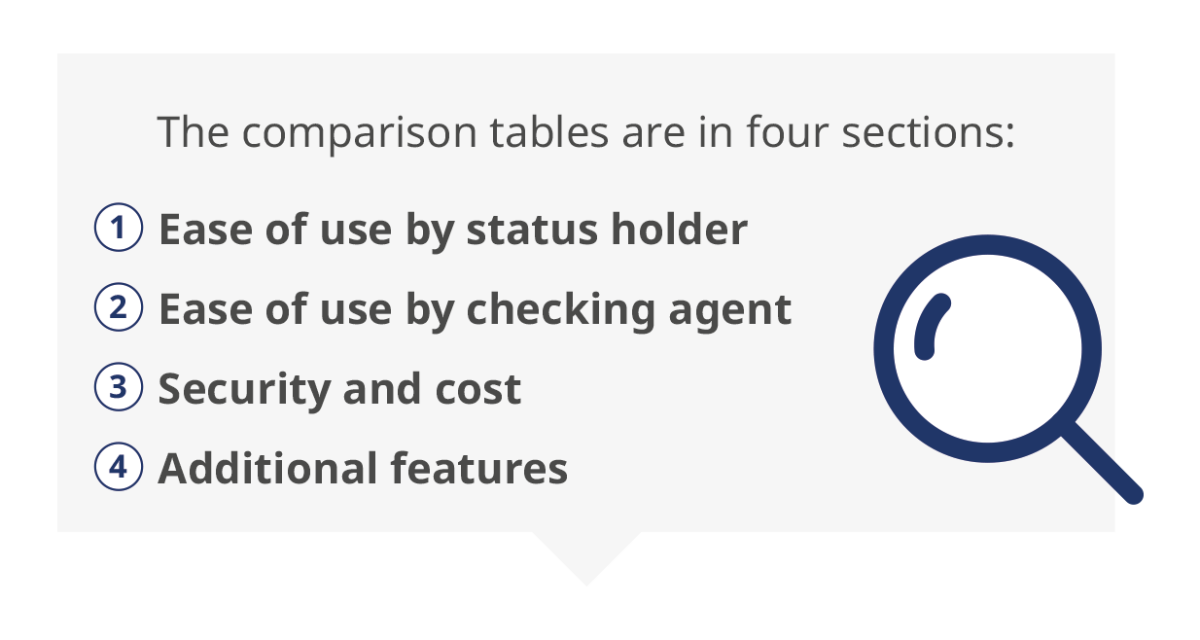
Comparison at a glance
The following tables show a comparison of features for three immigration status implementations:
- Biometric card – existing biometric residence cards or permits which are being phased out.
- View & Prove service – the existing implementation of digital EUSS status. It involves the status holder visiting a website and using identity document details and two-factor authentication to generate a share code which is passed to the checking agent who needs to input the share code and date of birth into another website.
- Digital token – – the Secure QR Code scheme discussed in this briefing paper as an alternative proposal. It involves the citizen being issued with a document which they can simply show (either in paper form or electronically) to the checking agent. The agent then verifies the authenticity of the document by using a scanning app (also inputting the citizen’s date of birth) to decrypt the Secure QR Code.
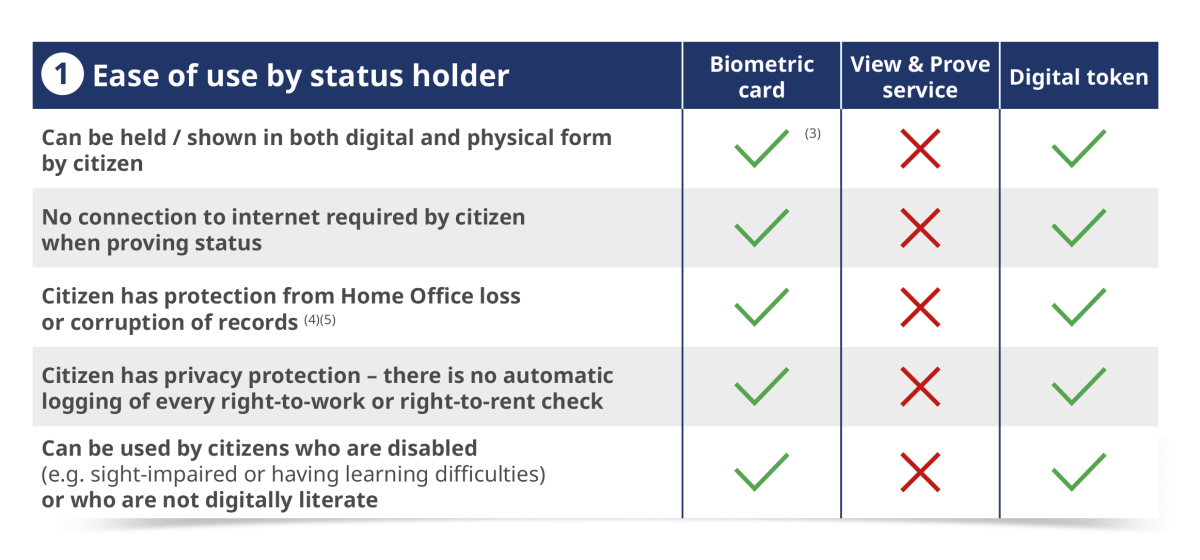
(3) Many citizens with biometric residence cards currently also have a digital UK immigration status
(4) ‘Home Office ‘working to restore “lost police records”’ https://www.bbc.co.uk/news/uk-55691710
(5) ‘Home Office immigration database errors hit more than 76,000 people’
https://www.theguardian.com/uk-news/2024/mar/14/home-office-immigration-database-errors-hit-more-than-76000-people
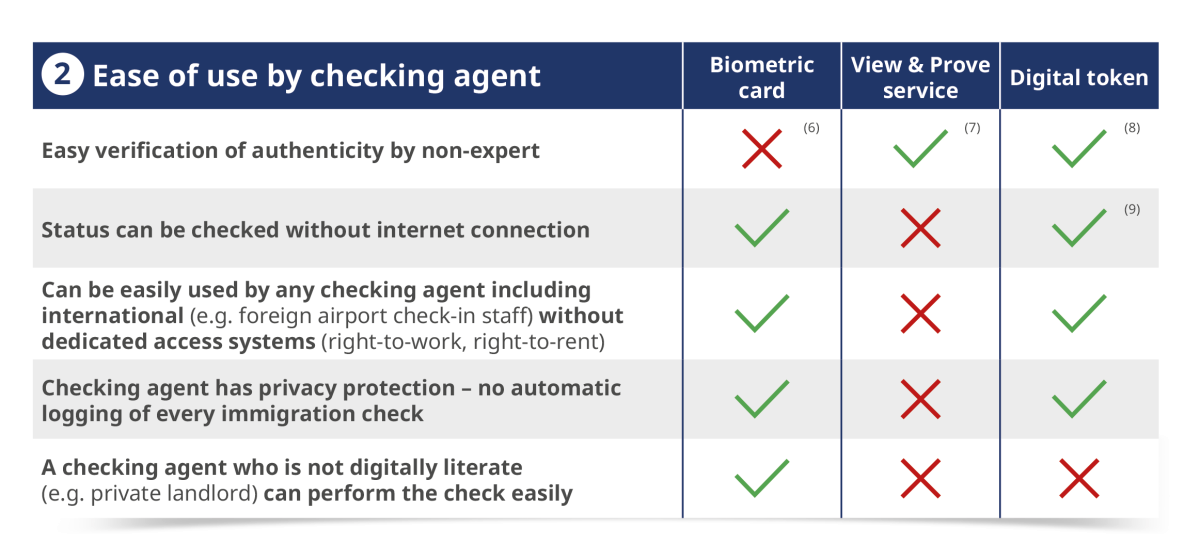
(6) Requires e.g. magnifiers, ultraviolet light sources, and detailed knowledge of security features – see https://www.gov.uk/government/publications/recognising-fraudulent-identity-documents
(7) Evidence of authenticity is use of the trusted gov.uk domain
(8) Simple Home Office app will verify using highly secure PKI (Public Key Infrastructure). Evidence of authenticity is Home Office app as downloaded from the trusted gov.uk domain
(9) The checking agent only needs the internet to download the Home Office app for the first time, and from time to time to refresh the app. They do not need the internet to perform individual status checks.
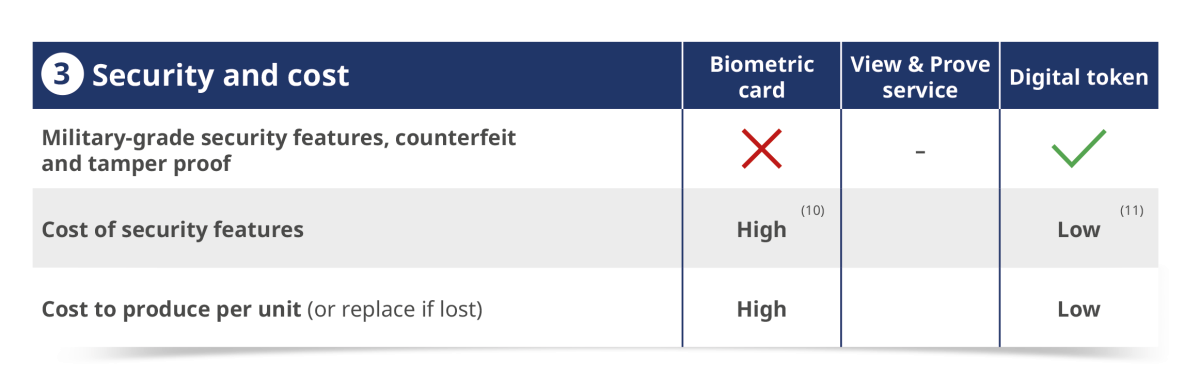
(10) E.g. watermarks, holograms, random fibres, background print, special inks
(11) Public Key encryption – far more secure and no per-unit cost
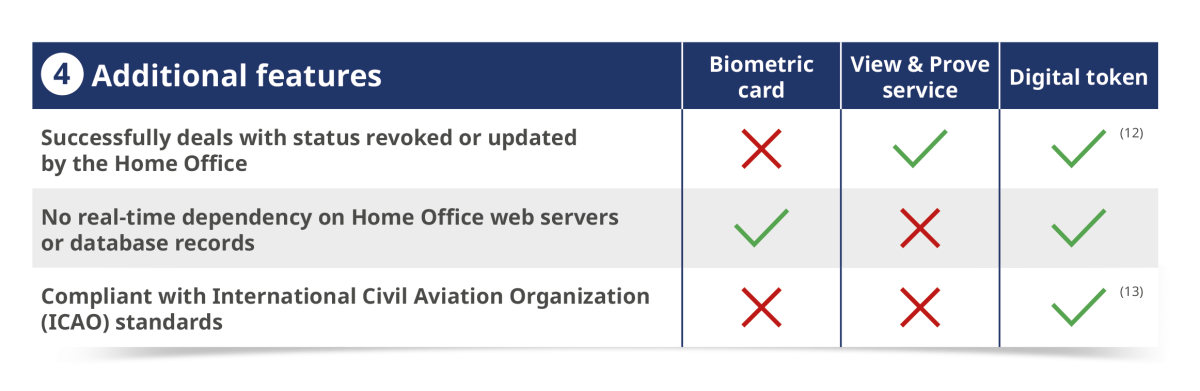
(12) The scanning app will be able to identify whether an individual ’s status has been cancelled by the Home Office, by using revoke-lists periodically refreshed when the app has internet connection
(13) See Machine Readable Travel Documents - Visible Digital Seals https://www.icao.int/publications/Documents/9303_p13_cons_en.pdf


