
Photography: Carolina Henriques
JOURNEY
Prior to coming to the UK, I was living in Denmark, which is where I was born and raised. I came here because I got accepted to a university and I decided to start there. I think had it not been for the academic appeal of the United Kingdom, I wouldn’t really have thought to come here, especially not at the age of 19 which I believe I was when I moved. So yeah I moved in September 2020, which was before the EU pre-settled status cut off, meaning I have that. I applied to universities in multiple cities in the UK, but I think London was the most appealing to me because it seemed the most international. So I’m not sure whether I really was aiming to move to England or more specifically to London.
I think the quite short distance between Denmark and England maybe also took away some of the stress and meant that I wasn’t as worried about how different it would be as maybe if I’d been moving farther away. Also, I was comfortable with the language, so I think that helped as well. The difficult part of moving at 30 or so to a new city as big as London is that you feel extremely alone at the beginning. It's really difficult to recreate a new group of people, to have somebody who you can call when you’re tired or when there is a problem.

BELONGING
While I did grow up in Denmark, both my parents are of mixed background. I would say I had a quite international upbringing in Denmark.
I went to a Russian-speaking school, but even there because my family wasn’t Russian Russian – I mean some people place a lot of emphasis on that – just quite often in many situations I felt that I’m on the margins of some group, you know, living in Denmark but then wasn’t speaking Danish at home, went to a Russian-speaking school but my family was not ethnically Russian, so I think coming to London did give me a sense of belonging.
Not necessarily because I feel like I belong but because I see so many other people who don’t belong, many people who just came here out of interest or for a job.
And then, I think also the international aspect of London has helped me feel that I belong because I can interact with communities, including my own, but also foreign communities in a way that just wasn’t possible in Denmark, because it’s too small, they don’t have the events, the holidays, the restaurants, things like that.
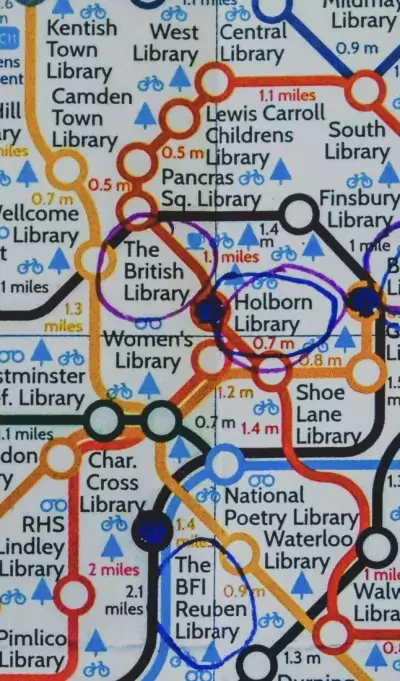
Another thing is libraries, which I found as a student in London, because there are so many specialty libraries, particularly regional ones or thematic ones, like a feminist library but I also have access to some national archives of other countries and somehow those things just end up in London I guess, but yeah that’s another thing that helps me kind of hold on to my cultures.

IDENTITY
I recently went to France by train with a friend and went there from the UK and I hadn’t expected to feel as strongly as I did. I was really shocked by how much closer to Europe I felt by being in France, coming from the UK, which is interesting because, I mean, before I always thought of the UK as being European and surely, I can see some cultural similarities, but I don’t know if it’s the work culture or the overall capitalist sentiment in the UK but I definitely felt like being in France was more European. It kind of did reignite this feeling of being European within myself.
Personally, I’m a huge fan of the EU, so I would definitely say that I see myself as European as well. That’s not to say that we’re all the same. I think there are big differences as well but if you look at bigger countries as well there are huge regional variations, but I don’t think that is something that necessarily stops it from being some kind of group.
I wish maybe that people recognised that it takes a lot, that there are so many steps to migrating – there’s getting the idea, coming to terms with it yourself, figuring out how it’s feasible and how to do it, there’s the actual trip, settling in and integrating. There are so many steps to it.